Research Article | | Peer-Reviewed

Design, Synthesis, and Antimicrobial Profiling of Novel Schiff Base Metal (II) Complexes: Structural Characterization and Structure

Received: 4 November 2025     Accepted: 14 November 2025     Published: 17 December 2025
Views:       Downloads:
Abstract

This study aimed to design, synthesize, and characterize novel ruthenium (II) Schiff base complexes as potential antimicrobial agents to address the growing crisis of multidrug-resistant bacterial infections. Despite advances in antibiotic development, resistance to existing drugs, particularly in Staphylococcus aureus and Escherichia coli-demands new compounds with alternative mechanisms of action. A key research gap lies in the limited exploration of pyridine-imine Schiff base ruthenium complexes with systematic substitution (-Br, -OH) and a comparison between simple Ru (II) and Ru(II)-p-cymene architectures. Ligands and their Ru (II) complexes were synthesized and characterized by FT-IR, UV-Vis, 1H NMR, and melting point. Antimicrobial activity was evaluated using agar disc diffusion against both bacterial strains at concentrations ranging from 125 to 1000 µg/mL, with data analyzed using two-way ANOVA and Fisher’s LSD test (α = 0.05). Results showed Ru (II) complexes exhibited significantly higher inhibition than free ligands (p ≤ 0.05), with bromo- and hydroxy-substituted cymene complexes (e.g., L-C2, L1-C2) displaying the strongest activity (up to 14 -15 mm zones). Although all compounds were less potent than gentamycin, the enhanced bioactivity upon metal coordination supports Tweedy’s chelation theory. These findings validate Ru (II)-Schiff base complexes as promising scaffolds for future antimicrobial development, warranting further studies on MIC, toxicity, and antifungal activity.

Published in American Journal of Applied Chemistry (Volume 13, Issue 6)
DOI 10.11648/j.ajac.20251306.11
Page(s) 152-163
Creative Commons

This is an Open Access article, distributed under the terms of the Creative Commons Attribution 4.0 International License (http://creativecommons.org/licenses/by/4.0/), which permits unrestricted use, distribution and reproduction in any medium or format, provided the original work is properly cited.

Copyright

Copyright © The Author(s), 2025. Published by Science Publishing Group

Keywords

Schiff Base, Ruthenium (II) Complexes, Antibacterial Activity, Pyridine-imine Ligands, Spectral Characterization, p-Cymene Ruthenium

1. Introduction
The alarming rise of antimicrobial resistance (AMR) represents one of the most pressing global public health crises of the 21st century. Pathogenic bacteria are evolving mechanisms to evade the effects of conventional antibiotics at an unprecedented rate, rendering many first-line therapeutics ineffective . This phenomenon has been exacerbated by the overuse and misuse of antimicrobial agents in clinical, agricultural, and veterinary settings, leading to the emergence of multidrug-resistant (MDR) strains that cause life-threatening infections with limited or no treatment options . Infections caused by MDR Staphylococcus aureus and extended-spectrum β-lactamase (ESBL)-producing Escherichia coli, for example, are now commonly reported in both hospital and community environments, contributing significantly to global morbidity and mortality . Consequently, there is an urgent and unmet need for the development of novel antimicrobial agents that function through distinct mechanisms of action to circumvent existing resistance pathways and effectively combat resistant pathogens .
In this context, medicinal inorganic chemistry has emerged as a fertile frontier for the rational design of next-generation therapeutics. The field leverages the unique physicochemical properties of metal ions and their coordination complexes to generate bioactive molecules with enhanced efficacy, selectivity, and novel modes of action . The paradigm-shifting discovery of cisplatin, a square-planar platinum (II) complex, in the 1960s marked the dawn of metal-based chemotherapy and catalyzed extensive research into transition metal complexes as potential drugs . While platinum drugs like carboplatin and oxaliplatin have since become mainstays in oncology, their clinical utility is often limited by severe systemic toxicities and the development of resistance . As a result, this has prompted a strategic shift toward non-platinum metals, particularly ruthenium (Ru), which exhibits a more favorable toxicity profile, rich redox chemistry, and versatile coordination behavior .
Ruthenium-based organometallic compounds are especially promising due to their iron-mimetic properties, which allow them to exploit endogenous iron-transport pathways for targeted delivery to diseased tissues . Ru(II/III) complexes typically adopt an octahedral geometry, providing a three-dimensional scaffold that enhances their potential for site-specific interactions with biological macromolecules, such as DNA, RNA, and proteins . Furthermore, ruthenium complexes exhibit tunable ligand exchange kinetics and accessible redox states, allowing for fine control over their reactivity and cellular localization . These attributes have propelled ruthenium into the spotlight not only as an anticancer agent (e.g., NAMI-A and KP1019 in clinical trials) but also as a potent antimicrobial scaffold .
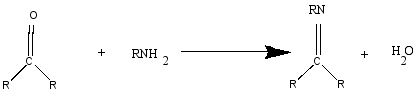
A key strategy in optimizing the biological activity of such metallodrugs is the rational design of organic ligands that modulate the complex’s electronic structure, lipophilicity, and target affinity. Among the most versatile and synthetically accessible ligand classes are Schiff bases-organic compounds characterized by an azomethine (-HC=N-) functional group formed via the condensation of a primary amine with a carbonyl compound .
Figure 1. General preparation method of Schiff base.
Schiff bases are often referred to as “privileged ligands” in coordination chemistry due to their structural flexibility, ease of synthesis, and strong chelating ability through nitrogen, oxygen, or sulfur donor atoms . The imine nitrogen possesses a lone pair of electrons that readily coordinates to metal centers, while substituents on the aromatic rings can be systematically varied to fine-tune steric and electronic properties .
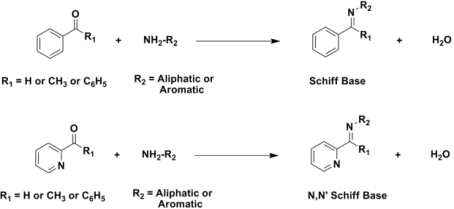
The biological potency of Schiff base metal complexes is frequently enhanced upon coordination, a phenomenon widely rationalized by Tweedy’s chelation theory .
Figure 2. Formation of bidentate Schiff base (Shafi et al., 2012).
According to this principle, the formation of a metal-ligand chelate reduces the overall polarity of the metal ion through charge delocalization over the chelate ring. Thus, this increases the complex’s lipophilicity, thereby facilitating its passive diffusion across the hydrophobic lipid bilayer of microbial cell membranes . Once inside the cell, the complex can disrupt essential physiological processes by binding to vital cellular components—such as enzymes involved in respiration or DNA replication—through coordination to key metal-binding sites . This multi-target mechanism of action makes it more difficult for microbes to develop resistance compared to conventional, single-target antibiotics.
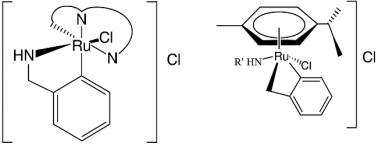
Of particular interest are pyridine-imine Schiff bases, which act as N, N’-bidentate ligands, forming stable five-membered chelate rings with transition metals. The pyridyl nitrogen and the imine nitrogen both serve as strong σ-donor and π-acceptor sites, stabilizing lower oxidation states of the metal and enhancing complex stability . Pyridine itself is a privileged pharmacophore in medicinal chemistry: numerous clinically approved drugs, including the anti-inflammatory piroxicam, the antibacterial sulfapyridine, and the antihistamine tripelennamine, contain a 2-aminopyridine core . Pyridine derivatives have demonstrated a broad spectrum of biological activities, including antiviral, anticonvulsant, antitubercular, and antidiabetic effects . When incorporated into a Schiff base framework and coordinated to ruthenium, these ligands create hybrid molecules that synergistically combine the inherent bioactivity of the organic scaffold with the unique redox and coordination chemistry of the metal center.
Figure 3. Pyridine-based Ru (II) complexes bearing (N, N, N’) and (N, N’) ligands.
Recent studies have highlighted the antimicrobial potential of ruthenium-Schiff base complexes. For instance, reported that ruthenium (II) arene complexes bearing N, N’-bidentate Schiff base ligands exhibited significant activity against both Gram-positive and Gram-negative bacteria. Similarly, demonstrated that Ru (II) complexes with Schiff base co-ligands derived from phenanthroline displayed enhanced antibacterial effects compared to their free ligands. The structure-activity relationship (SAR) in these systems is highly sensitive to ligand substitution: electron-donating groups (e.g., -OH) or electron-withdrawing groups (e.g., -Br) on the aryl ring can profoundly influence the complex’s electronic density, lipophilicity, and DNA-binding affinity . Such subtle modifications offer a powerful tool for optimizing antimicrobial potency.
Half-sandwich ruthenium (II) complexes, featuring an arene ligand (e.g., p-cymene) in a characteristic “piano-stool” geometry, represent a particularly active and tunable class of organometallic compounds . The arene moiety occupies three coordination sites, leaving three labile sites for binding to bidentate ligands and anionic co-ligands (e.g., Cl⁻). This architecture not only imparts kinetic stability but also allows for modular functionalization to modulate solubility, charge, and biological targeting . The precursor [(η6-p-cymene) RuCl2]2, a chloro-bridged dimer, is synthetically versatile and readily undergoes bridge-splitting reactions with N, N’-donor ligands to yield cationic or neutral mononuclear complexes . These complexes have found applications not only in catalysis but also in biological settings, where their cationic nature promotes electrostatic interactions with the negatively charged phosphate backbone of DNA .
The interaction of ruthenium complexes with nucleic acids is a well-established antimicrobial mechanism. Cationic Ru(II) polypyridyl complexes can bind DNA via intercalation, groove binding, or covalent coordination . Inert complexes (e.g., [Ru(phen)3]2⁺) typically bind reversibly through intercalation, while labile complexes (e.g., Ru-arene species) can form covalent adducts at guanine N7 sites, disrupting replication and transcription . Additionally, some Ru complexes can generate reactive oxygen species (ROS) under physiological conditions, inducing oxidative stress and triggering bacterial cell death . These multi-modal mechanisms—combined with the inherent difficulty microbes face in evolving resistance to metal-based agents—make ruthenium complexes highly attractive candidates for antimicrobial development.
Despite these advances, there remains a significant gap in the systematic exploration of structurally diverse pyridine-imine Schiff base ligands coordinated to ruthenium in the context of antibacterial SAR. In particular, the influence of electron-donating (-OH) versus electron-withdrawing (-Br) substituents on the aryl ring of the Schiff base on the antimicrobial efficacy of the resulting Ru(II) complexes has not been fully elucidated. Moreover, comparative studies between simple Ru(II) Schiff base complexes and their half-sandwich p-cymene analogues are scarce, yet crucial for understanding how the arene moiety modulates biological activity.
Therefore, this study was designed to address these knowledge gaps through the rational design, synthesis, and comprehensive characterization of a new series of ruthenium (II) complexes derived from three structurally related pyridine-imine Schiff base ligands: (i) unsubstituted (from aniline), (ii) hydroxyl-substituted (from 4-aminophenol), and (iii) bromo-substituted (from 4-bromoaniline). The synthesized ligands and their corresponding Ru(II) and Ru(II)-p-cymene complexes were fully characterized using FT-IR, UV-Vis, 1H NMR spectroscopy, and melting point analysis, with spectral data providing unambiguous evidence for coordination through the imine and pyridyl nitrogen atoms. This structural elucidation forms the essential foundation for interpreting the subsequent in vitro antibacterial screening against representative Gram-positive (Staphylococcus aureus) and Gram-negative (Escherichia coli) pathogens. By correlating structural features-such as ligand substitution pattern and the presence of the p-cymene moiety with observed biological activity, this work aims to establish critical structure-activity relationships that will inform the future development of ruthenium-based antimicrobial agents capable of overcoming the growing threat of AMR.
2. Materials and Methods
2.1. Chemicals and Instrumentation
All reagents were of analytical grade and used as received without further purification. 2-Pyridinecarboxaldehyde, aniline, 4-bromoaniline, 4-aminophenol, ruthenium (III) chloride hydrate, and [(η6-p-cymene) RuCl2]2 were purchased from Sigma-Aldrich. Solvents (diethyl ether, acetonitrile, DMSO, methanol) were used as supplied.
Melting points were determined using an open capillary method. FT-IR spectra were recorded on a Shimadzu FTIR-8400S spectrometer (4000-400 cm⁻1) using KBr pellets. UV-Vis spectra were acquired on a Shimadzu UV-1800 spectrophotometer (200-600 nm) in acetonitrile (1 cm path length). 1H NMR spectra were recorded at 25 °C on a Bruker Avance III HD 400 MHz spectrometer in DMSO-d₆, with tetramethylsilane (TMS) as internal standard. Antibacterial assays were conducted at the Kenya Medical Research Institute (KEMRI).
2.2. Synthesis of Schiff Base Ligands
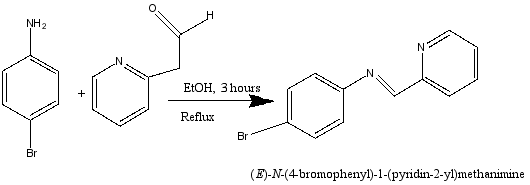
The Schiff base ligands were prepared by equimolar condensation of 2-pyridinecarboxaldehyde (1.0 mmol) with the respective aniline derivative (1.0 mmol) in 30 mL diethyl ether under nitrogen, with a catalytic amount of p-toluene-sulfonic acid.
Figure 4. Synthesis of (E)-N-(4-bromophenyl)-1-(pyridin-2-yl) methenamine.
The mixtures were stirred at room temperature for 12 h, yielding precipitates that were filtered, washed with cold diethyl ether, and dried under vacuum.
1) (E)-N-(4-Bromophenyl)-1-(pyridin-2-yl)methanimine (L): yellowish-grey microcrystalline solid, 90% yield.
2) (E)-N-Phenyl-1-(pyridin-2-yl) methanimine (L1): reddish oil, 85% yield.
3) (E)-4-((Pyridin-2-ylmethylene) amino) phenol (L2): pale yellow microcrystalline solid, 90% yield.
2.3. Synthesis of Ruthenium (II) Complexes
Non-cymene Ru(II) complexes: To a suspension of RuCl3·xH2O (0.5 mmol) in acetonitrile (20 mL) was added the Schiff base ligand (1.0 mmol). The mixture was refluxed under N2 for 3 h, cooled, and the precipitate filtered, washed with diether, and dried (yield: 89-91%).
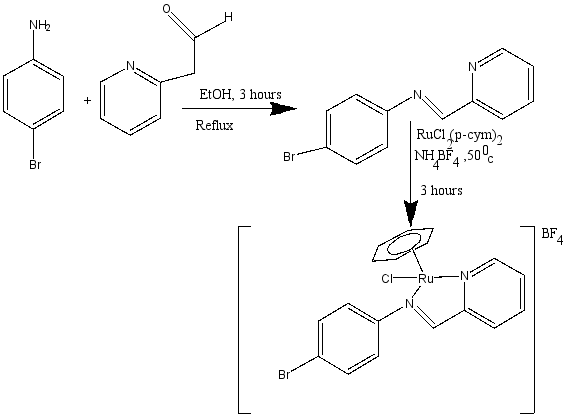
Figure 5. Synthesis of of [RuCl(C₁₀H₁₄)(L)]BF4 {where L =(E)-N-(4-bromophenyl)-1-(pyridin-2-yl)methanimine.
Half-sandwich Ru(II)-cymene complexes: (η6-p-cymene) RuCl2]2 (0.27 mmol) in acetonitrile (30 mL) was treated with the Schiff base ligand (0.55 mmol) and refluxed for 3 h. The solvent was reduced in vacuo, and NH₄BF₄ (0.55 mmol) was added to the residue. The mixture was cooled in ice, and the resulting precipitate was collected by vacuum filtration, washed with diethyl ether, and dried under vacuum (yield: 87-92%).
2.4. Characterization
FT-IR, UV-Vis, 1H NMR, and melting point characterized all compounds. Spectral assignments confirmed coordination through the imine nitrogen and pyridyl nitrogen atoms, as detailed in the Results and Discussion.
2.5. Antimicrobial Assay
Antibacterial activity was evaluated against Staphylococcus aureus (Gram-positive) and Escherichia coli (Gram-negative) using the agar disc diffusion method (CLSI guidelines). Mueller-Hinton agar plates were inoculated with standardized bacterial suspensions (0.5 McFarland). Sterile filter paper discs (6 mm) impregnated with 20 μL of test solutions (125, 250, 500, and 1000 μg/mL in DMSO) were placed on the agar surface. Gentamycin (10 μg/disc) served as the positive control; DMSO alone served as the negative control. Plates were incubated at 37°C for 24 hours, and the zones of inhibition (mm) were measured. Experiments were performed in triplicate.
2.6. Statistical Analysis
Data were analyzed by two-way ANOVA followed by Fisher’s Least Significant Difference (LSD) test (α = 0.05) using R v4.3.0. Values are expressed as means ± standard deviation.
3. Results
3.1. Synthesis and Physical Properties
Three bidentate Schiff base liands-(E)-N-(4-bromophenyl)-1-(pyridin-2-yl) methenamine (L), (E)-N-phenyl-1-(pyridin-2-yl) methenamine (L1), and (E)-4-((pyridin-2-ylmethylene)amino)phenol (L2)—were synthesized in high yields (85-90%) via a one-pot condensation of 2-pyridinecarboxaldehyde with 4-bromoaniline, aniline, or 4-aminophenol, respectively (Scheme 1). The corresponding simple Ru(II) complexes (L-Ru, L1-Ru, L2-Ru) and half-sandwich Ru(II)-cymene complexes (L-C1, L1-C2, L2-C3) were obtained in 87-92% yield by reacting the ligands with RuCl3·xH2O or [(η6-p-cymene)RuCl2]2, followed by anion exchange with NH₄BF₄ (Scheme 2).
All complexes were air-stable, crystalline solids. The Ru-cymene complexes were orange/green crystals, while the simple Ru(II) complexes appeared as purple solids (Table 1). All compounds were soluble in polar aprotic solvents (DMSO, acetonitrile) but insoluble in non-polar solvents (diethyl ether, hexane). Melting points of the complexes (175-235 °C) were consistently higher than those of the free ligands (70-180 °C), indicating enhanced thermal stability upon coordination (Table 1).
Table 1. Melting points of ruthenium (II) complexes and ligands.

Ligand/Complex

Calculated Molecular Weight

Mpt (°C)

Colour

Yield (%)

L1

182

-

Reddish oil

85

L

261

70

Yellow powder

89

L2

198

180

Yellow powder

90

L-C1

616

175

Orange crystals

90

L1-C2

537

205

Green crystals

92

L2-C3

553

220

Orange crystals

87

L-Ru

693

210

Purple crystals

89

L1-Ru

567

224

Purple crystals

91

L2-Ru

535

235

Purple crystals

89

3.2. Spectroscopic Characterization
FT-IR Spectroscopy
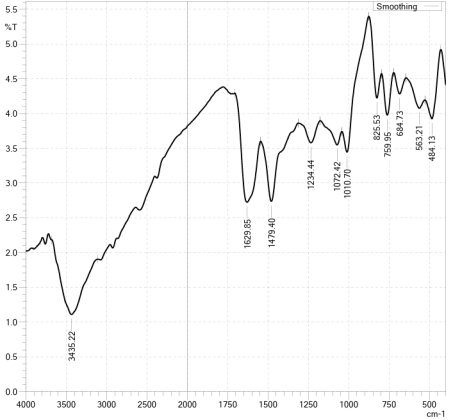
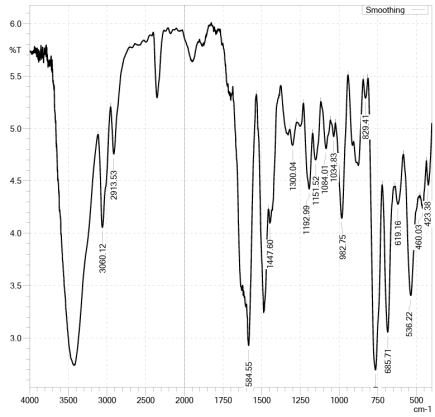
FT-IR confirmed coordination through imine (-CH=N-) and pyridyl nitrogen atoms. The free ligands exhibited strong C=N(imine) stretches at 1625-1632 cm⁻1. Upon complexation, this band shifted to lower frequencies (1600-1620 cm⁻1), consistent with electron donation from the imine nitrogen to the Ru(II) center (Table 2).
Table 2. FT-IR Spectral Data for Ligands and Complexes.

Ligand/ Complex

C=C (cm-1)

C=Nimine (cm-1)

C=Npyridine (cm-1)

L

1470

1630

1628

L1

1584

1628

1634

L2

1573

1629

1632

L-C1

1479

1631

1631

L1-C2

1498

1600

1570

L2-C3

1500

1604

1500

L-Ru

1448

1604

1585

L1-Ru

1479

1600

1570

L2-Ru

1496

1629

1479

The C=N(pyridine) stretch also shifted from 1573-1584 cm⁻1 (free ligands) to 1479-1570 cm⁻1 (complexes), further supporting bidentate N, N’-coordination. Additionally, the -OH stretch of L2 (3200 cm⁻1) disappeared in L2-Ru and L2-C3, confirming participation of the phenolic oxygen or H-bonding disruption upon metal binding. New bands at 400-405 cm⁻1 were assigned to ν(Ru-N), and bands at 763-778 cm⁻1 confirmed the presence of [BF₄]⁻ in cymene complexes. Consider Figures 6, 7, and 8.
Figure 6. IR Spectra of (L1).
Figure 7. IR Spectra of L2-Ru complex.
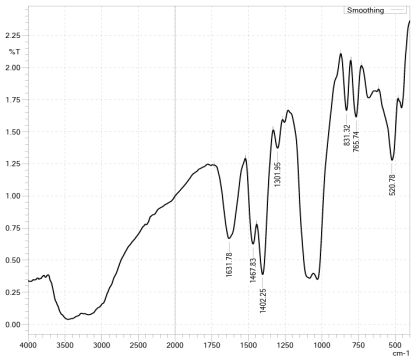
Figure 8. IR Spectra of L1-C1 complex.
3.3. 1H NMR Spectroscopy
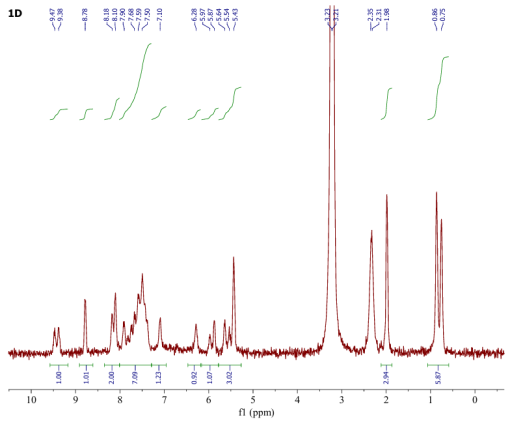
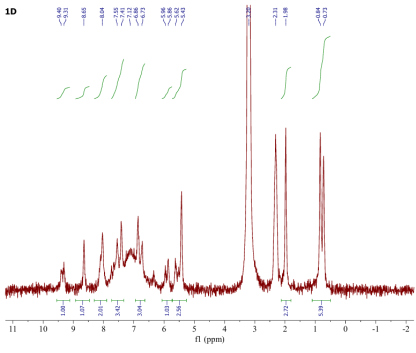
In DMSO-d₆, the imine proton (-CH=N-) of free ligands appeared as a sharp singlet at δ 7.63-7.66 ppm. Upon coordination, this signal shifted downfield to δ 7.43-7.55 ppm, confirming involvement of the imine nitrogen in Ru binding (Figures 9-11). For the Ru-cymene complexes, the p-cymene protons appeared as four distinct doublets in the range δ 5.38-6.28 ppm, indicating loss of symmetry due to chelation—consistent with a pseudo-octahedral “piano-stool” geometry. Consider Figures 2, 10, and 11.
Figure 9. 1H NMR of L2C3.
Figure 10. 1H NMR of L1C2.
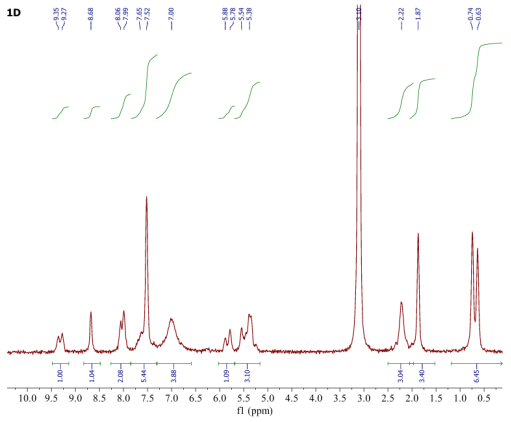
Figure 11. 1H NMR of LC1.

4. Discussion
The observed enhancement in antimicrobial activity upon coordination of Schiff base ligands to Ru(II) aligns with Tweedy’s chelation theory, wherein metal complexation reduces the polarity of the metal ion, increases lipophilicity, and facilitates membrane penetration . This trend is consistent with prior studies , which reported that Ru(II)-arene complexes with N, N′-bidentate ligands exhibit superior activity against both Gram-positive and Gram-negative bacteria compared to the free ligands. Similarly, noted that cationic Ru(II) polypyridyl complexes disrupted bacterial membranes via electrostatic interactions and ROS generation. The moderate activity against E. coli relative to S. aureus reflects the protective role of the Gram-negative outer membrane—a pattern also observed by for Ru(II) triazole complexes. Notably, complexes with electron-donating (-OH) and electron-withdrawing (-Br) substituents (e.g., L2-C3, L-C2) displayed higher inhibition than unsubstituted analogues, echoing findings by that substituent electronics modulate bioactivity. While none surpassed gentamycin, the dose-dependent response and significant (p ≤ 0.05) differences confirm that structural features—ligand substitution and Ru-cymene coordination—critically influence antibacterial efficacy, supporting further development of Ru-Schiff base scaffolds as alternatives to conventional antibiotics.
5. Conclusions
In this study, three bidentate pyridine-imine Schiff base ligands and their corresponding Ru(II) and Ru(II)-p-cymene complexes were successfully synthesized and characterized by FT-IR, UV-Vis, 1H NMR spectroscopy, and melting point analysis. Spectroscopic data confirmed coordination through the imine and pyridyl nitrogen atoms, consistent with an N, N’-bidentate binding mode. The complexes exhibited enhanced thermal stability and distinct electronic transitions—including metal-to-ligand charge transfer (MLCT) bands—absent in the free ligands, which verified the successful complexation. While antimicrobial activity was modest compared to gentamycin, Ru(II) complexes consistently outperformed their parent ligands, with substituted derivatives (-Br, -OH) showing superior inhibition against both Staphylococcus aureus and Escherichia coli. These findings support Tweedy’s chelation theory and underscore the role of ligand electronics and Ru coordination in modulating bioactivity. The results validate Schiff base Ru(II) complexes as promising scaffolds for developing novel antimicrobial agents to combat resistant pathogens.
Abbreviations

SB

Schiff Base

FT-IR

Fourier Transform Infrared Spectroscopy

UV-Vis

Ultraviolet-Visible Spectroscopy

NMR

Nuclear Magnetic Resonance

1H NMR

Proton Nuclear Magnetic Resonance

TMS

Tetramethylsilane

MLCT

Metal-to-Ligand Charge Transfer

DMSO

Dimethyl Sulfoxide

MHA

Mueller Hinton Agar

MIC

Minimum Inhibitory Concentration

DNA

Deoxyribonucleic Acid

Cym

p-Cymene (or C10H14)

Acknowledgments
The author gratefully acknowledges the Department of Physical Sciences at Chuka University for providing a supportive and conducive research environment that facilitated the successful completion of this work. Special thanks are extended to the two supervisors, Prof. Joel M. Gichumbi and Prof. Ombaka Ochieng’, for their invaluable guidance, insightful critiques, and unwavering encouragement throughout the course of this study. Their expertise in inorganic and medicinal chemistry significantly shaped the scientific rigor and direction of this research. The author also appreciates the technical support from laboratory staff and the institutional backing from Chuka University’s Graduate School, which together enabled the synthesis, characterization, and biological evaluation of the novel ruthenium (II) Schiff base complexes reported herein.
Author Contributions
Shem Ongechi Nyang’ate: Conceptualization, Data curation, Formal Analysis, Methodology, Writing – original draft, Writing – review & editing
Joel Mwangi Gichumbi: Conceptualization, Data curation, Formal Analysis, Methodology, Writing – original draft, Writing – review & editing
Esther Wanja Nthiga: Conceptualization, Data curation, Formal Analysis, Methodology, Writing – original draft, Writing – review & editing
Funding
This research did not receive any external funding.
Data Availability Statement
The data is available from the corresponding author upon reasonable request.
Conflicts of Interest
The authors declare that they have no conflicts of interest.
References
[1] Catalano, A., Iacopetta, D., Ceramella, J., Scumaci, D., Giuzio, F., Saturnino, C., Aquaro, S., Rosano, C., & Sinicropi, M. S. (2022). Multidrug Resistance (MDR): A Widespread Phenomenon in Pharmacological Therapies. Molecules, 27(3), 616.
[2] Hossain, Md. S. (2018). Metal Complexes as Potential Antimicrobial Agent: A Review. American Journal of Heterocyclic Chemistry, 4(1), 1.
[3] Dickey, S. W., Cheung, G. Y. C., & Otto, M. (2017). Different drugs for bad bugs: antivirulence strategies in the age of antibiotic resistance. Nature Reviews Drug Discovery, 16(7), 457-471.
[4] Kanaoujiya, R., Singh, M., Singh, J., & Srivastava, S. (2020). Ruthenium Based Anticancer Compounds and Their Importance. Journal of Scientific Research, 64(01), 264-268.
[5] Bolhuis, A., Hand, L., Marshall, J. E., Richards, A. D., Rodger, A., & Aldrich-Wright, J. (2011). Antimicrobial activity of ruthenium-based intercalators. European Journal of Pharmaceutical Sciences, 42(4), 313-317.
[6] Rosato, A., Catalano, A., Carocci, A., Carrieri, A., Carone, A., Caggiano, G., Franchini, C., Corbo, F., & Maria Teresa Montagna. (2016). In vitro interactions between anidulafungin and nonsteroidal anti-inflammatory drugs on biofilms of Candida spp. Bioorganic & Medicinal Chemistry, 24(5), 1002-1005.
[7] Gichumbi, J. M., Friedrich, H. B., Omondi, B., Singh, M., Naicker, K., & Chenia, H. Y. (2016). Synthesis, characterization, and cytotoxic and antimicrobial activities of ruthenium(II) arene complexes with N,N-bidentate ligands. Journal of Coordination Chemistry, 69(23), 3531-3544.
[8] Mjos, K. D., & Orvig, C. (2014). Metallodrugs in Medicinal Inorganic Chemistry. Chemical Reviews, 114(8), 4540-4563.
[9] Wheate, N. J., Walker, S., Craig, G. E., & Oun, R. (2010). The status of platinum anticancer drugs in the clinic and in clinical trials. Dalton Transactions, 39(35), 8113.
[10] Jeon, J., Lee, S., Kim, H., Kang, H., Youn, H., Jo, S., Youn, B., & Kim, H. Y. (2021). Revisiting Platinum-Based Anticancer Drugs to Overcome Gliomas. International Journal of Molecular Sciences, 22(10), 5111.
[11] Li, F., Collins, J. G., & Keene, F. R. (2015). Ruthenium complexes as antimicrobial agents. Chemical Society Reviews, 44(8), 2529-2542.
[12] Keene, A. B., Shiloh, A. L., Eisen, L., Berger, J., Karwa, M., Fein, D., Orsi, D., & Gong, M. (2020). Critical Care Surge During the COVID-19 Pandemic: Implementation and Feedback From Frontline Providers. Journal of Intensive Care Medicine, 36(2), 233-240.
[13] Brabec, V., & Kasparkova, J. (2018). Ruthenium coordination compounds of biological and biomedical significance. DNA binding agents. Coordination Chemistry Reviews, 376, 75-94.
[14] Munteanu, A.-C., & Uivarosi, V. (2021). Ruthenium Complexes in the Fight against Pathogenic Microorganisms. An Extensive Review. Pharmaceutics, 13(6), 874.
[15] Vigato, P. A., & Tamburini, S. (2004). The challenge of cyclic and acyclic schiff bases and related derivatives. Coordination Chemistry Reviews, 248(17-20), 1717-2128.
[16] Liu, X., & Hamon, J.-R. (2019). Recent developments in penta-, hexa- and heptadentate Schiff base ligands and their metal complexes. Coordination Chemistry Reviews, 389, 94-118.
[17] Yufanyi, D. M., Abbo, H. S., Titinchi, S. J. J., & Neville, T. (2020). Platinum(II) and Ruthenium(II) complexes in medicine: Antimycobacterial and Anti-HIV activities. Coordination Chemistry Reviews, 414, 213285.
[18] Sadi, A. H., Idris, M. I., & Bashir, S. S. (2018). Synthesis, characterization and antimicrobial studies of Ru(II) complexes with Schiff base co-ligand derived from 5,6-diamino -1,10- phenanthroline and benzene -1,4-dicarbaldehyde. Bayero Journal of Pure and Applied Sciences, 10(1), 468-468.
[19] Reddy, V., Patil, N., & Angadi, S. D. (2008). Synthesis, Characterization and Antimicrobial Activity of Cu(II), Co(II) and Ni(II) Complexes with O, N, and S Donor Ligands. E-Journal of Chemistry, 5(3), 577-583.
[20] El-Sherif, A. A., & Eldebss, T. M. A. (2011). Synthesis, spectral characterization, solution equilibria, in vitro antibacterial and cytotoxic activities of Cu(II), Ni(II), Mn(II), Co(II) and Zn(II) complexes with Schiff base derived from 5-bromosalicylaldehyde and 2-aminomethylthiophene. Spectrochimica Acta Part A: Molecular and Biomolecular Spectroscopy, 79(5), 1803-1814.
[21] Howsaui, H. B., Basaleh, A. S., Abdellattif, M. H., Hassan, W. M. I., & Hussien, M. A. (2021). Synthesis, Structural Investigations, Molecular Docking, and Anticancer Activity of Some Novel Schiff Bases and Their Uranyl Complexes. Biomolecules, 11(8), 1138.
[22] Naeimi, H., & Moradian, M. (2009). Synthesis and characterization of nitro-Schiff bases derived from 5-nitro-salicylaldehyde and various diamines and their complexes of Co(II). Journal of Coordination Chemistry, 63(1), 156-162.
[23] Jesmin, M., Ali, M. M., Salahuddin, M. S., Habib, M. R., & Khanam, J. A. (2008). Antimicrobial Activity of Some Schiff Bases Derived from Benzoin, Salicylaldehyde, Aminophenol and 2,4 Dinitrophenyl Hydrazine. Mycobiology, 36(1), 70.
[24] Gichumbi, J. M., Friedrich, H. B., & Omondi, B. (2016). Application of arene ruthenium(II) complexes with pyridine-2-carboxaldimine ligands in the transfer hydrogenation of ketones. Journal of Molecular Catalysis. A, Chemical, 416, 29-38.
[25] Hakobyan, R. M., Shahkhatuni, A. A., Attaryan, H. S., Ayvazyan, A. G., & Melikyan, G. S. (2023). Synthesis and Selected Transformations of New 2‐Aminopyridine Derivatives Based on Furan‐2(5H)‐ones. ChemistrySelect, 8(30).
[26] Bolliger, J. L., Oberholzer, M., & Frech, C. M. (2011). Access to 2-Aminopyridines - Compounds of Great Biological and Chemical Significance. Advanced Synthesis & Catalysis, 353(6), 945-954.
[27] Felten, S., Marshall, S. F., Groom, A. J., Vanderlinden, R. T., Stolley, R. M., & Louie, J. (2018). Synthesis and Characterization of [(NHC)Ni(styrene)2] Complexes: Isolation of Monocarbene Nickel Complexes and Benchmarking of %VBurin (NHC)Ni-π Systems. Organometallics, 37(21), 3687-3697.
[28] Xie, Y., Yang, W., Tang, F., Chen, X., & Ren, L. (2015). Antibacterial activities of flavonoids: structure-activity relationship and mechanism. Current Medicinal Chemistry, 22(1), 132-149.
[29] Gichumbi, J. M., Omondi, B., & Friedrich, H. B. (2017). Half‐Sandwich Osmium(II) Complexes with Bidentate N,N‐Chelating Ligands and Their Use in the Transfer Hydrogenation of Ketones. European Journal of Inorganic Chemistry, 2017(5), 915-924.
[30] Kumar, P., Gupta, R. K., & Pandey, D. S. (2014). Half-sandwich arene ruthenium complexes: synthetic strategies and relevance in catalysis. Chem. Soc. Rev., 43(2), 707-733.
[31] Chanerika, R., Friedrich, H. B., & Shozi, M. L. (2019). Application of new Ru (II) pyridine‐based complexes in the partial oxidation of n‐octane. Applied Organometallic Chemistry, 34(2).
[32] Prakash, O., Sharma, K. N., Joshi, H., Gupta, P. L., & Singh, A. K. (2013). Half sandwich complexes of chalcogenated pyridine based bi-(N, S/Se) and terdentate (N, S/Se, N) ligands with (η6-benzene)ruthenium(ii): synthesis, structure and catalysis of transfer hydrogenation of ketones and oxidation of alcohols. Dalton Transactions, 42(24), 8736-8736.
[33] Sovari, S. N., & Zobi, F. (2020). Recent Studies on the Antimicrobial Activity of Transition Metal Complexes of Groups 6-12. Chemistry, 2(2), 418-452.
Cite This Article
  • APA Style

    Nyang’ate, S. O., Gichumbi, J. M., Nthiga, E. W. (2025). Design, Synthesis, and Antimicrobial Profiling of Novel Schiff Base Metal (II) Complexes: Structural Characterization and Structure. American Journal of Applied Chemistry, 13(6), 152-163. https://doi.org/10.11648/j.ajac.20251306.11

    Copy | Download

    ACS Style

    Nyang’ate, S. O.; Gichumbi, J. M.; Nthiga, E. W. Design, Synthesis, and Antimicrobial Profiling of Novel Schiff Base Metal (II) Complexes: Structural Characterization and Structure. Am. J. Appl. Chem. 2025, 13(6), 152-163. doi: 10.11648/j.ajac.20251306.11

    Copy | Download

    AMA Style

    Nyang’ate SO, Gichumbi JM, Nthiga EW. Design, Synthesis, and Antimicrobial Profiling of Novel Schiff Base Metal (II) Complexes: Structural Characterization and Structure. Am J Appl Chem. 2025;13(6):152-163. doi: 10.11648/j.ajac.20251306.11

    Copy | Download

  • @article{10.11648/j.ajac.20251306.11,
      author = {Shem Ongechi Nyang’ate and Joel Mwangi Gichumbi and Esther Wanja Nthiga},
      title = {Design, Synthesis, and Antimicrobial Profiling of Novel Schiff Base Metal (II) Complexes: Structural Characterization and Structure},
      journal = {American Journal of Applied Chemistry},
      volume = {13},
      number = {6},
      pages = {152-163},
      doi = {10.11648/j.ajac.20251306.11},
      url = {https://doi.org/10.11648/j.ajac.20251306.11},
      eprint = {https://article.sciencepublishinggroup.com/pdf/10.11648.j.ajac.20251306.11},
      abstract = {This study aimed to design, synthesize, and characterize novel ruthenium (II) Schiff base complexes as potential antimicrobial agents to address the growing crisis of multidrug-resistant bacterial infections. Despite advances in antibiotic development, resistance to existing drugs, particularly in Staphylococcus aureus and Escherichia coli-demands new compounds with alternative mechanisms of action. A key research gap lies in the limited exploration of pyridine-imine Schiff base ruthenium complexes with systematic substitution (-Br, -OH) and a comparison between simple Ru (II) and Ru(II)-p-cymene architectures. Ligands and their Ru (II) complexes were synthesized and characterized by FT-IR, UV-Vis, 1H NMR, and melting point. Antimicrobial activity was evaluated using agar disc diffusion against both bacterial strains at concentrations ranging from 125 to 1000 µg/mL, with data analyzed using two-way ANOVA and Fisher’s LSD test (α = 0.05). Results showed Ru (II) complexes exhibited significantly higher inhibition than free ligands (p ≤ 0.05), with bromo- and hydroxy-substituted cymene complexes (e.g., L-C2, L1-C2) displaying the strongest activity (up to 14 -15 mm zones). Although all compounds were less potent than gentamycin, the enhanced bioactivity upon metal coordination supports Tweedy’s chelation theory. These findings validate Ru (II)-Schiff base complexes as promising scaffolds for future antimicrobial development, warranting further studies on MIC, toxicity, and antifungal activity.},
     year = {2025}
    }
    

    Copy | Download

  • TY  - JOUR
    T1  - Design, Synthesis, and Antimicrobial Profiling of Novel Schiff Base Metal (II) Complexes: Structural Characterization and Structure
    AU  - Shem Ongechi Nyang’ate
    AU  - Joel Mwangi Gichumbi
    AU  - Esther Wanja Nthiga
    Y1  - 2025/12/17
    PY  - 2025
    N1  - https://doi.org/10.11648/j.ajac.20251306.11
    DO  - 10.11648/j.ajac.20251306.11
    T2  - American Journal of Applied Chemistry
    JF  - American Journal of Applied Chemistry
    JO  - American Journal of Applied Chemistry
    SP  - 152
    EP  - 163
    PB  - Science Publishing Group
    SN  - 2330-8745
    UR  - https://doi.org/10.11648/j.ajac.20251306.11
    AB  - This study aimed to design, synthesize, and characterize novel ruthenium (II) Schiff base complexes as potential antimicrobial agents to address the growing crisis of multidrug-resistant bacterial infections. Despite advances in antibiotic development, resistance to existing drugs, particularly in Staphylococcus aureus and Escherichia coli-demands new compounds with alternative mechanisms of action. A key research gap lies in the limited exploration of pyridine-imine Schiff base ruthenium complexes with systematic substitution (-Br, -OH) and a comparison between simple Ru (II) and Ru(II)-p-cymene architectures. Ligands and their Ru (II) complexes were synthesized and characterized by FT-IR, UV-Vis, 1H NMR, and melting point. Antimicrobial activity was evaluated using agar disc diffusion against both bacterial strains at concentrations ranging from 125 to 1000 µg/mL, with data analyzed using two-way ANOVA and Fisher’s LSD test (α = 0.05). Results showed Ru (II) complexes exhibited significantly higher inhibition than free ligands (p ≤ 0.05), with bromo- and hydroxy-substituted cymene complexes (e.g., L-C2, L1-C2) displaying the strongest activity (up to 14 -15 mm zones). Although all compounds were less potent than gentamycin, the enhanced bioactivity upon metal coordination supports Tweedy’s chelation theory. These findings validate Ru (II)-Schiff base complexes as promising scaffolds for future antimicrobial development, warranting further studies on MIC, toxicity, and antifungal activity.
    VL  - 13
    IS  - 6
    ER  - 

    Copy | Download

Author Information